

Before the Fire – Urban–Wildland Assessments and Hardening for Homes, Businesses, Schools, and Infrastructure
Strong private fire protection starts long before the actual fire. Defensible space, fire-resistant landscaping, and hardened construction help buildings survive major fires.
Safety Services Management (SSM) offers urban–wildland assessments across high-risk communities from Los Angeles to San Diego, designed to bring properties into line with California law and local policies and then go beyond minimum compliance.
Defensible Space Requirements in Southern California
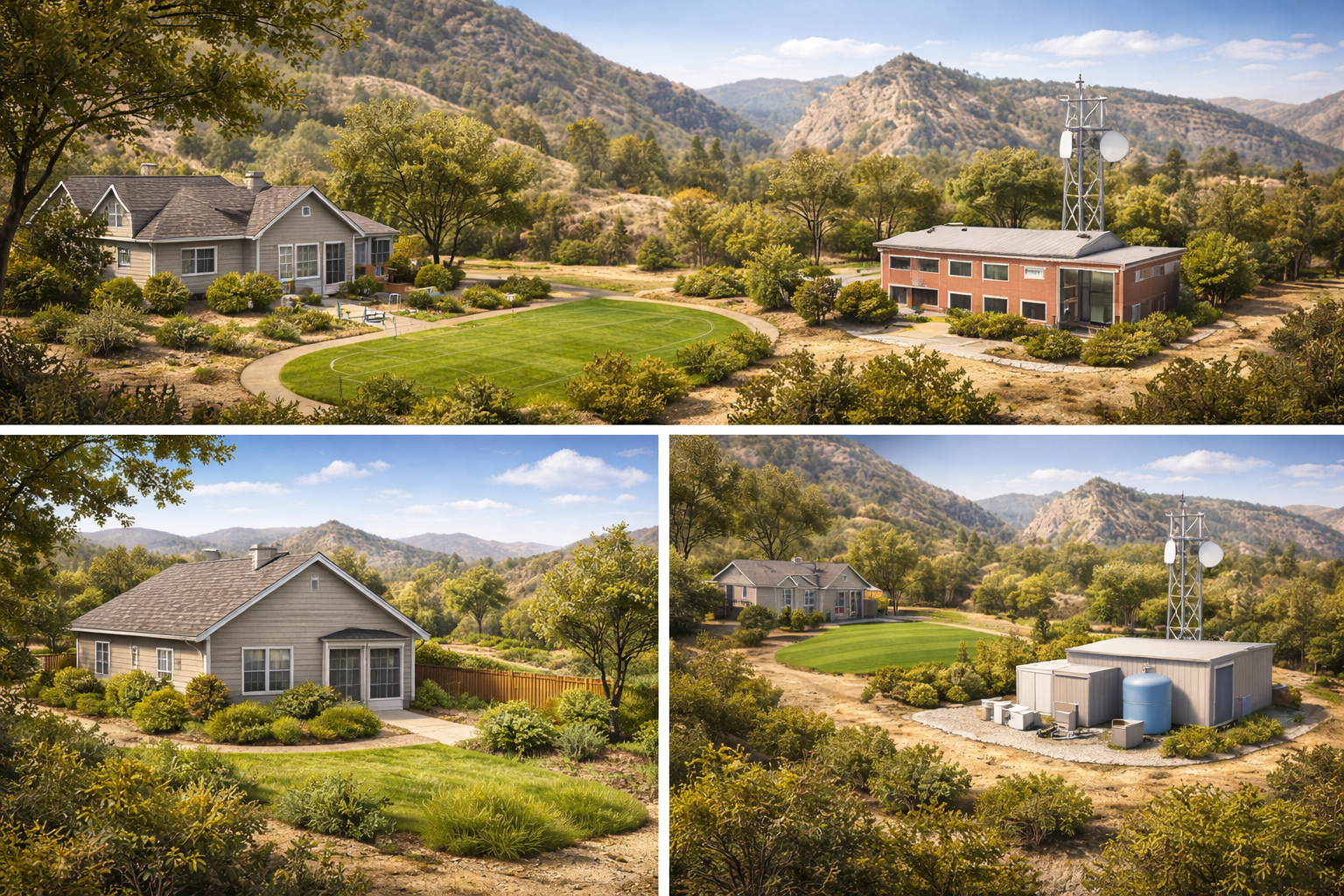
California’s Public Resources Code 4291 requires at least 100 feet of defensible space around structures in designated fire-prone areas, or to the property line. Local jurisdictions between Los Angeles and San Diego build on that baseline.
Urban–wildland assessments use these rules as a starting point, then adapt them to:
Single homes and estates in canyons and foothills
Commercial centers located near open space or brushy slopes
Private school campuses with large fields, parking areas, and surrounding vegetation
Critical infrastructure such as pump stations and communication facilities
The goal is to create a buffer where flames, embers, and radiant heat are far less likely to ignite buildings or critical equipment.
Understanding Neighborhood and Site Fire History
Effective hardening starts with an understanding of how fire has behaved in your area. SSM’s assessors, drawing on wildland and structural fire experience, look at:
Past fire perimeters that have threatened or burned near the site
Typical wind patterns that drive fire into particular canyons, ridges, or developments
Common ignition sources such as power lines, highways, encampments, or recreational use
Access routes for engines, including street width, grade, overhead clearance, and turning space for fire apparatus
This analysis shapes which parts of the property or facility are highest risk and what improvements matter most.
Defensible Space Zones for Different Property Types
Assessments typically divide the property into zones
Zone 0 : (0–5 feet) the ember-resistant zone. The ideal condition is minimal combustible material touching the structure. That means pulling mulch away from foundations, relocating wood fences that attach directly to buildings, and moving other combustibles away from walls.
Zone 1 : (often 5–30 feet) the lean, clean, and green zone. Lawns or low, irrigated plantings, well-spaced shrubs, and no accumulation of dead vegetation. For a home this might be a yard; for a school it may include play areas; for a commercial or infrastructure site it may include walkways, courtyards, and equipment yards.
Zone 2 : (30–100 feet) the reduced fuel zone. Here the strategy is to thin, prune, and break up continuous fuels without scraping the land bare. This could be a slope behind a home, the hillside behind a warehouse, or the open space adjacent to a pump station or campus.
The goal is the same for all zones, to eliminate continuous fuels that can carry fire right to the structure.
Vegetation Removal, Replacement, and Fuel Modification
SSM’s assessments recommend a combination of:
Removing or drastically reducing dry grass, ladder fuels, and dense shrubs directly against structures, classrooms, or critical equipment
Thinning native chaparral instead of clear-cutting, keeping erosion concerns in mind
Cutting tree branches so lower branches do not provide a ladder for fire
Replacing plants with drought-resistant options
This can mean moving plants near driveways, under eaves, or near decks and patios for homes. For businesses and schools, it may mean modifying parking lot islands or other plantings.
Building Materials, Vents, and WUI-Rated Products
Vegetation is only part of the risk. Embers attack the building envelope itself. SSM’s assessments pay close attention to:
Roof coverings and their fire ratings
Gutters and eaves that can collect leaves and embers
Siding materials and trim
Decks, balconies, and combustible elements like wood fences
Vents into attics
Windows and doors, especially large glazed areas facing expected fire exposure
For homes, recommendations might include upgrading to a Class A roof or installing ember-resistant vents. For commercial buildings and schools, there may be opportunities to upgrade roof assemblies, protect rooftop equipment, or enclose openings. For infrastructure, the focus often includes protecting control buildings, electrical rooms, and cable penetrations.
Technology and Equipment to Improve Protection
In addition to vegetation and construction, SSM may recommend:
Exterior sprinklers or nozzle systems in key locations
Dedicated water storage tanks and high-pressure pumps for large properties or remote facilities
Hydrant or standpipe improvements on long driveways, campuses, or infrastructure sites
Backup power solutions to keep pumps and critical systems running during grid failures
These systems are not a replacement for defensible space but can be powerful add ons.
Wildfire Action Plans
Every assessment should end with a practical action plan. SSM helps owners and managers develop:
Clear evacuation triggers for homeowners
Business continuity and shutdown procedures for commercial sites
School evacuation and reunification plans
Facility shutdown or protection procedures for critical infrastructure
The practical action plan helps everyone know what to do in the case of a wildfire.
How Urban–Wildland Assessments Support Private Firefighting
When a private fire crew responds to a property that has already undergone a thorough assessment and hardening process, they are operating with a huge advantage. They know:
Where the hazards are
Where water and equipment are located
How the property is laid out
What has already been done to reduce risk
That preparation can make a big difference when the fire arrives.
Safety Services Management (SSM) can help by providing a professional urban–wildland assessment of your property to identify risks and recommend defensible space, hardening, and preparedness improvements. Click here to request an assessment and learn about private fire protection services.
Learn more about defensible space and home hardening:
CAL FIRE – Defensible Space:
https://www.fire.ca.gov/dspace CAL FIRECAL FIRE – Get Ready:
https://www.fire.ca.gov/prepare/get-ready CAL FIREReady for Wildfire – How to Create Defensible Space:
https://readyforwildfire.org/prepare-for-wildfire/defensible-space/ Ready for WildfireReady for Wildfire – Wildfire Home Hardening Guide:
https://readyforwildfire.org/prepare-for-wildfire/hardening-your-home/ Ready for WildfireLAFD – Brush Clearance Requirements:
https://lafd.org/fire-prevention/brush/brush-clearance-requirements Los Angeles Fire DepartmentLA County Fire – Fire Hazard Reduction Program:
https://fire.lacounty.gov/fire-hazard-reduction-programs/ Fire Department - Los Angeles CountyOCFA – Vegetation Management / Ready, Set, Go!:
https://ocfa.org/ready-set-go/vegetation-management/ Orange County Fire AuthorityOCFA – Defensible Space Disclosure:
https://ocfa.org/ready-set-go/defensible-space-disclosure/ Orange County Fire AuthoritySan Diego County – Fire, Defensible Space, and You:
https://www.sandiegocounty.gov/content/sdc/pds/fire_resistant.html County of San Diego
CAL FIRE / Cal OES – Wildfire Community Hardening Framework:
https://www.caloes.ca.gov/wp-content/uploads/Recovery/Documents/CWMP-Framework-v2.2.pdfCal OES